Figures as published (August 5, 2026). Prices written in the article text are our catalog's figures when it was written, and prices move — each phone's current price and its status (observed with a date, or an estimate) are on its page and in the “Phones mentioned” cards below, and any device or brand count above belongs to that date.
Five years ago, 6,000 mAh meant a thick phone with an LCD screen and slow charging. Today there are 299 devices above that figure, and most of them are ordinary phones with AMOLED screens and fast charging, not rugged models or special editions. What changed isn't manufacturer ambition; it's that battery density itself improved, so more energy now fits into roughly the same space.
Big batteries aren't new — what comes with them is
The cheapest 6,000 mAh phone on the local market is the Tecno Spark 6 Air at JOD 26, from 2020: an IPS LCD HD+ screen at 60Hz, 10W charging, and a performance index of 8 out of 100. The Infinix Smart 5 at JOD 28, from 2021, tells almost the same story. So the big number has been around for years — it just arrived alongside every compromise imaginable. The difference today is that you get a larger battery with a 120Hz AMOLED panel and charging above 60W. The brand with the most 6,000 mAh-plus models is Realme with 39 devices, followed by Xiaomi with 35, Vivo with 33 and Honor with 25.
The highest figures available today
- Honor X70 — JOD 249, 8,300 mAh, 80W charging, 6.79-inch AMOLED FHD+ at 120Hz
- Honor X9d — JOD 279, 8,300 mAh, 66W charging, AMOLED 1.5K screen and a 108+5 camera
- Honor Magic 8 Lite — JOD 269, 8,000 mAh, 66W charging, AMOLED 1.5K at 120Hz
- Honor Power — JOD 269 (up to 329 for higher configurations), 8,000 mAh, Snapdragon 7 Gen3 and a performance index of 62
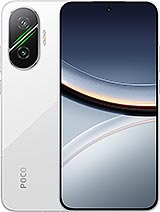
- Poco F7 — JOD 379 (up to 429), 7,550 mAh, 90W charging, and a performance index of 88
What you give up in return
One point deserves attention: in this segment, the bigger battery usually comes at the expense of the rest of the phone. The Honor X70 and Honor X9d both score 54 out of 100 on our performance index, because the chip is a Snapdragon 6 Gen4, and the X70's camera is 50+2 with just an 8-megapixel front camera. You are buying endurance, not performance or photography. The second trade-off you feel in your hand: 8,300 mAh has to live somewhere, so the phone ends up heavier and thicker than one with a 5,000 mAh cell — something a spec sheet never shows, but you notice on day one.
The third trade-off is charging time. A larger battery needs faster charging, and that doesn't always follow. The Lenovo Legion Y70 (2026) is a 2026 device with a performance index of 90, an OLED 2K screen at 144Hz and an 8,000 mAh battery — but it charges at only 33W, so a full top-up takes far longer than on the Poco F7, which pairs 7,550 mAh with 90W. When comparing, never read the battery figure on its own; read it next to the charging figure.
The practical takeaway: if you spend your day away from an outlet, 8,000 mAh at JOD 269 in the Honor Magic 8 Lite is a sensible deal that genuinely solves your problem. But if you charge at the office or in the car, you're paying in weight and thickness for something you don't need — in which case the gap between the Honor X9d at JOD 279 with an index of 54 and the Poco F7 at JOD 379 with an index of 88 is worth thinking through carefully.
What this analysis is based on
The figures here are computed from the Phones JO catalog itself — specifications taken from manufacturers’ official announcements, and prices from dated observation runs of OpenSooq listings for new units. This is not rewritten from other sites, and we have not tested the phones ourselves. Our method in detail ›
Follow our prices on Google: add Phones JO as a preferred source