Figures as published (August 4, 2026). Prices written in the article text are our catalog's figures when it was written, and prices move — each phone's current price and its status (observed with a date, or an estimate) are on its page and in the “Phones mentioned” cards below, and any device or brand count above belongs to that date.
Foldables have stopped being an experiment, but buying one still works differently from buying a normal phone: a lot of names, prices that sit oddly far apart, and availability that varies model by model. Before the shape wins you over, a few numbers and practical points should shape the decision.
The picture in numbers
Our database lists 81 foldable phones across 13 brands. Samsung leads with 17 devices, followed by Huawei with 13 and Honor with 12, then Motorola with 9, and Xiaomi, Oppo and Vivo with 6 each, plus smaller names such as Tecno with 4, Google with 3 and Nubia with 2. Prices run from JOD 119 for the oldest model on the list up to JOD 2299 for the priciest version — which means the word "foldable" on its own tells you nothing about what tier a phone belongs to.
Book or clamshell?
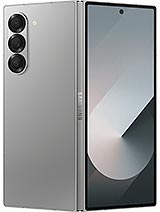
Book-style models open into a large inner display, and they are the heaviest and most expensive. The Galaxy Z Fold 8 has an 8.0-inch 120Hz screen, a Snapdragon 8 Elite Gen 5 chip, 12GB of RAM, a 4400mAh battery and 25W charging, starting at JOD 1099 and reaching JOD 1499 depending on the version. The older Galaxy Z Fold 6, with a 7.6-inch screen and a Snapdragon 8 Gen3, starts at JOD 659 — a large gap in price for a smaller gap in day-to-day use.
Clamshells fold a normal-sized phone down to half its height, and they are the cheaper way into the category. The Galaxy Z Flip 8 has a 6.9-inch screen, an Exynos 2600 chip, a 4300mAh battery and 25W charging, from JOD 649. The Motorola Razr 60 Ultra has a 7.0-inch 165Hz screen, a Snapdragon 8 Elite, 16GB of RAM, a 4700mAh battery and 68W charging, from JOD 749. The Xiaomi Mix Flip 2 has a 6.86-inch screen, a 5165mAh battery and 67W charging, from JOD 649. Note the charging gap: 25W against 67W and 68W in roughly the same price band.
Before you buy
- Repairs: a cracked inner display on a foldable costs far more than a normal phone screen, and parts are not always easy to source locally.
- The hinge: it is the only moving part in the phone, which adds a mechanical failure mode that regular phones simply do not have — and dust is its enemy.
- Weight and thickness: book-style models stay noticeably heavier than a regular flagship, something you feel after a week rather than on day one.
- Cameras: at the same price, a conventional flagship usually gives you a stronger camera system. Clamshells like the Galaxy Z Flip 8 ship with just two rear cameras (50+12), while book-style models carry three lenses but in a much more expensive body.
And if you spot foldables at unusually low prices in local classified listings, be careful: the cheapest model on our list costs JOD 119 but scores 24 out of 100 on our performance index, with an old chip, a 2510mAh battery and a 60Hz screen. These are almost always used units with a hinge that has been working for years, and no official warranty. On a tight budget, a used conventional flagship remains the smarter buy over a very cheap foldable.
What this analysis is based on
The figures here are computed from the Phones JO catalog itself — specifications taken from manufacturers’ official announcements, and prices from dated observation runs of OpenSooq listings for new units. This is not rewritten from other sites, and we have not tested the phones ourselves. Our method in detail ›
Follow our prices on Google: add Phones JO as a preferred source